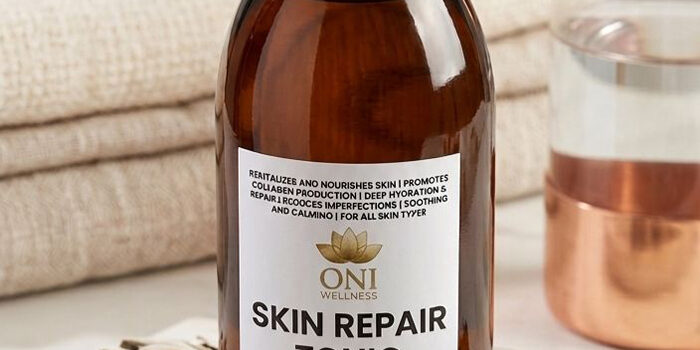
A skin repair tonic (often called a treatment tonic) bridges the gap between a traditional cleanser and your heavy-duty serums. Unlike old-school, alcohol-heavy toners that strip your skin, a modern repair tonic is designed to feed the skin matrix, calm irritation, and mend a compromised skin barrier.
The specific benefits depend heavily on its active ingredients, but a high-quality skin repair tonic generally delivers these core advantages:
1. Rebuilds and Strengthens the Skin Barrier
When your skin barrier is damaged (from over-exfoliation, harsh weather, or pollution), you experience tightness, redness, and flaking. Repair tonics often utilize ingredients like Centella Asiatica (Cica), Beta-Glucan, or Niacinamide to stimulate ceramide production, patch up micro-tears in the stratum corneum (the skin’s outermost layer), and build resilience against external irritants.
2. Delivers Deep, Multi-Layer Hydration
Because tonics have a watery or slightly viscous texture, they penetrate the skin much faster than thick creams.
-
Many formulations feature Humectants (like Hyaluronic Acid or Glycerin) that act like tiny magnets, drawing moisture deep into the skin tissue to plump up fine lines and eliminate dehydration lines.
-
This immediate burst of moisture softens the top layer of skin cells, making it much easier for your subsequent serums and moisturizers to absorb efficiently.
3. Rapidly Calms Redness and Inflammation
If you suffer from reactive skin, rosacea, or acne inflammation, a repair tonic acts as an immediate soothing treatment. Botanicals like chamomile derivatives (Bisabolol), aloe vera, and colloidal oats quickly reduce thermal heat in the skin, stop the “stinging” sensation, and bring down angry red blotches.
4. Fades Post-Acne Marks and Brightens Tone
A healthy barrier is essential for cellular turnover. Repair tonics frequently blend mild skin-renewing agents—such as Polyhydroxy Acids (PHAs) like gluconolactone—or brightening agents like Licorice Root and Vitamin C. These ingredients gently lift away dead, dull skin cells and break down excess melanin pockets without causing the irritation or sun-sensitivity associated with harsher acids.